
Applications
One technology, wherever mmWave needs gain
The antenna is not tied to an industry. It applies anywhere a system needs a large, efficient millimetre-wave antenna — and where depth, mass and unit cost decide whether the product reaches the market.
Telecom backhaul
The situation. E-band and V-band carry the capacity that fibre cannot reach economically. The antenna is often the most visible part of the link — and the part that decides what the mast, the permit and the installation crew will cost.
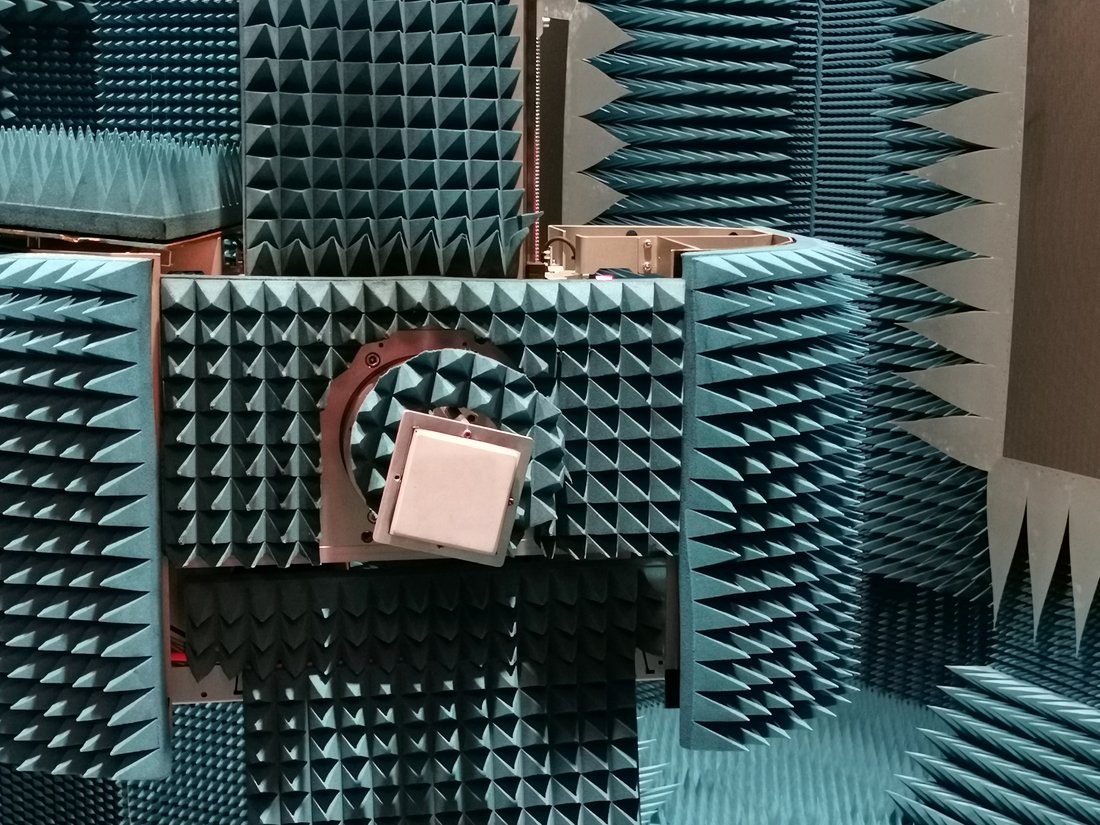
What changes. A 7.6 mm flat panel at 38 dBi replaces a dish of comparable gain. Wind load drops, mounting hardware simplifies, site acquisition gets easier where visual impact is contested.
What you can get today. The Backbone series: four models for 71–86 GHz and 57–68 GHz, meeting ETSI class 3 and 2B, with configurable shape, mounting, polarisation angle and flange. Radomes are designed per project. Integrated diplexer in development.
Typical fit
- Bands57–68 / 71–86 GHz
- GainUp to 43 dBi
- ComplianceETSI class 2B / 3
- Profile7.6–8.2 mm
- InterfaceWR-12 / WR-15
- EnclosureCustom radome
mmWave 5G and fixed wireless access
The situation. Millimetre-wave 5G delivers the capacity but struggles with range. Coverage per site drives the economics of the whole deployment, and coverage is set by EIRP — which is set by how much of the amplifier power actually leaves the array.
What changes. In a beam-steering array the feed loss is paid on every element. Lowering it converts directly into range, or lets the same range be reached with fewer amplifiers and less thermal design.
What you can get. Phased-array antennas developed to your requirement in the 28 GHz band and elsewhere in the mmWave spectrum, as an NRE project, a supply agreement, or a licence to build in-house.

Radar and sensing
The situation. Autonomous driving and advanced driver assistance need to separate a pedestrian from a lamp post. That is angular resolution, and angular resolution comes from aperture — a large array of elements, each of which has to be fed efficiently.
Why it is hard. At 77 GHz, and more so in the W and D bands that next-generation sensors are moving toward, microstrip and SIW feed networks lose too much across a large aperture. The array the sensor needs is the array the feed cannot support.
What changes. Low-loss distribution makes large arrays practical at these frequencies, which is what 4D imaging radar requires. The same argument applies to industrial, security and infrastructure sensing at millimetre-wave.

Where we fit in a radar programme
Feasibility
Aperture, resolution and loss budget assessed against your sensor requirement.
Custom design
NRE-funded antenna development, measured and delivered as hardware.
Supply or licence
Series delivery, or transfer of design and process for tier-1 in-house production.
Satellite communication and space
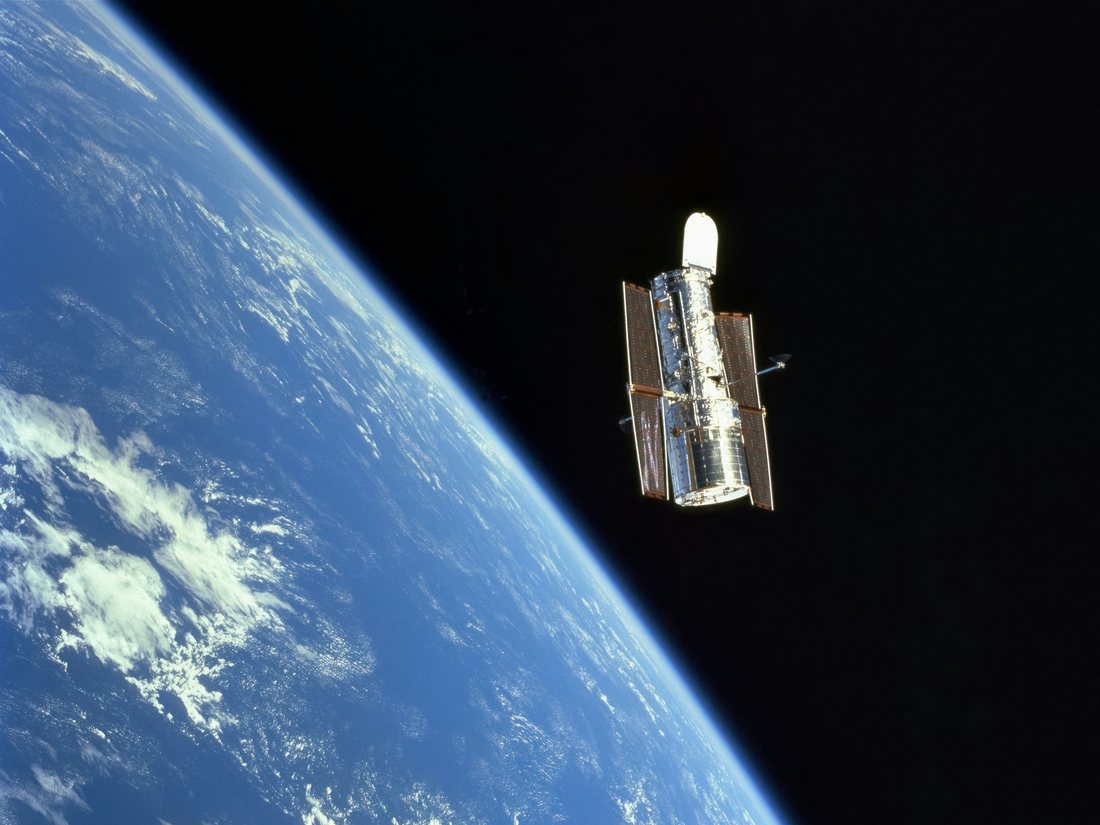
The situation. A spacecraft antenna has to survive launch and orbit, with extreme temperatures and high vibration, within a mass and volume budget that is fixed years in advance — and there is no second chance after launch. On the ground, a terminal has to track a moving satellite, survive weather and mount somewhere a customer will accept.
What changes. A flat, efficient antenna suits both: it packs flat for launch, it holds performance under vibration and across a wide temperature range, and it makes electronic steering practical instead of mechanical.
What you can get. Custom antennas for satellites and other space platforms as well as ground terminals, developed against your environmental and interface specification, with the option to license the design for production inside your own supply chain.
Defence and security
The situation. Military vehicles, aircraft, ships and mobile radar carry more antennas and sensors than they have room for, and every one adds weight and volume.
What changes. A flat, efficient antenna takes less space and mass, makes electronic steering practical instead of mechanical, and holds performance under vibration and across a wide temperature range.
What you can get. Custom antennas for communication and sensing, developed against your environmental and interface specification, with the option to license the design for production inside your own supply chain.

Further sectors
Anywhere the antenna is the bottleneck
Emerging mmWave systems
New bands and new system concepts appear faster than antenna supply chains adapt. If your requirement sits between 20 and 200 GHz and needs gain, it is worth a conversation.
Next step
Does your requirement fit?
Band, gain, envelope, interface, volume. Send those five and you will get a direct answer — including "no" if the technology is the wrong tool for your system.